17 Clever Small Bedroom Decor Ideas
Small bedrooms often feel challenging to style because every piece has to earn its place. That’s where Small Bedroom Decor Ideas become less about decoration and more about intention. Instead of filling the room, the focus shifts toward choosing pieces that visually open up space while still making it feel warm and lived in.
What I’ve noticed is that small rooms actually feel more refined when they stay simple and consistent. Light layering, soft textures, and thoughtful placement can change the entire mood without overwhelming the layout. This collection focuses on realistic styling ideas that feel achievable, calm, and naturally cohesive without needing a full redesign.
1. Add Layered Neutral Bedding Depth
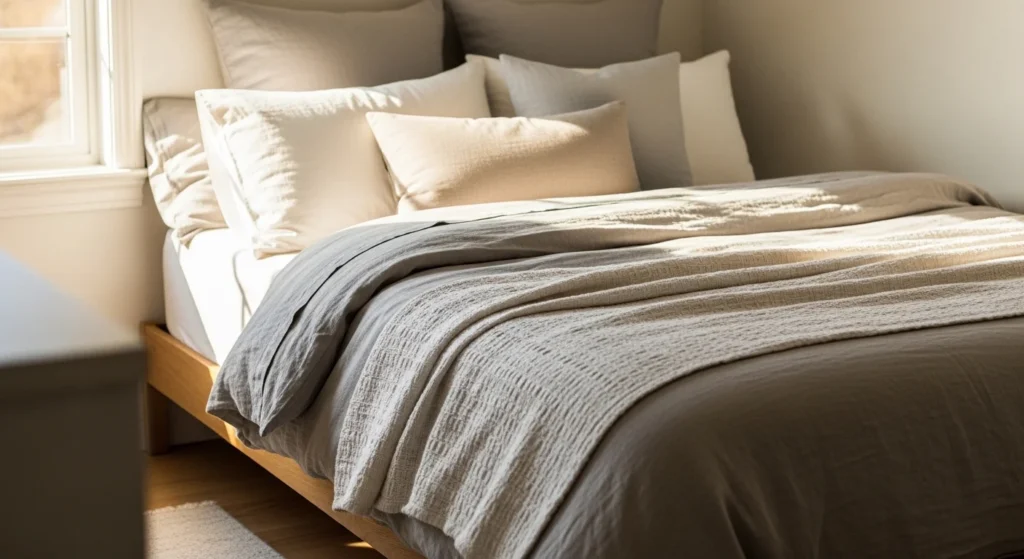
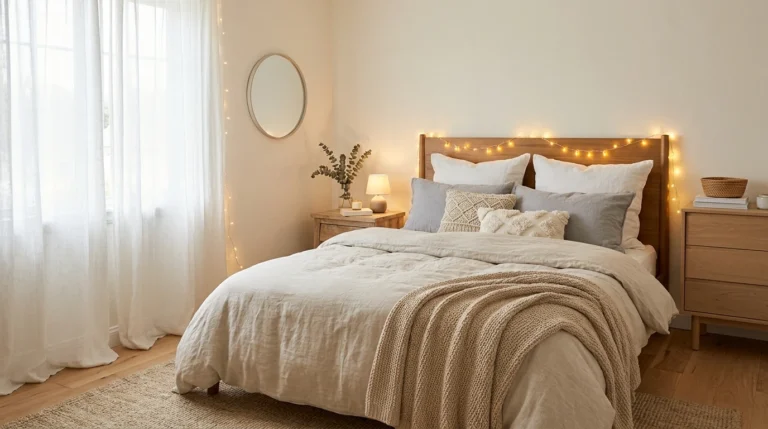
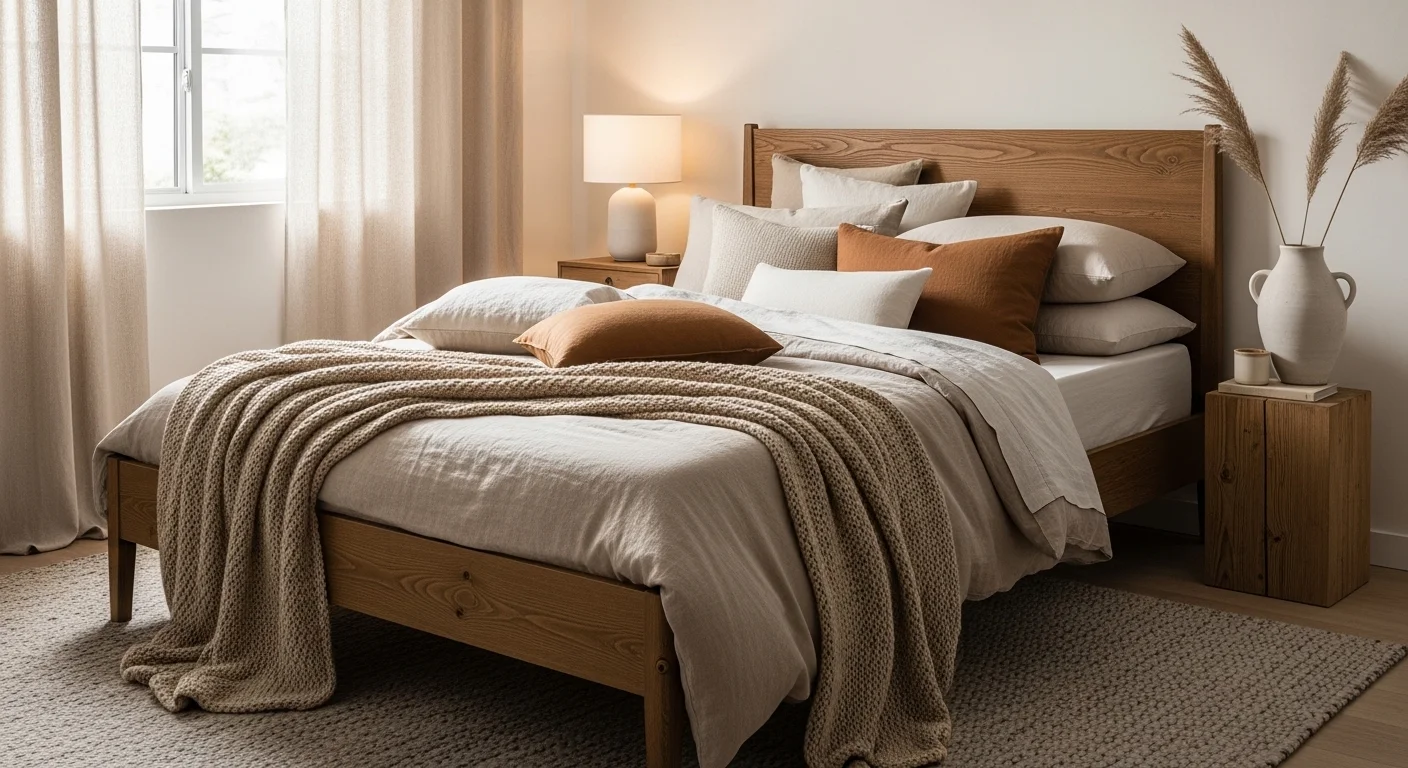
Layered bedding is one of the simplest ways to make a small bedroom feel styled without adding clutter. A combination of soft neutral sheets, a lightweight duvet, and a textured throw instantly creates depth. The trick is sticking to calm tones like beige, cream, or muted grey so the bed blends naturally into the space. Even in a compact room, this layering makes the bed feel intentional instead of oversized or heavy. It’s an easy styling shift that doesn’t require extra furniture or effort.
Real talk: the bed sets the entire mood of a small room.
2. Use Wall-Mounted Nightstands Space Saver
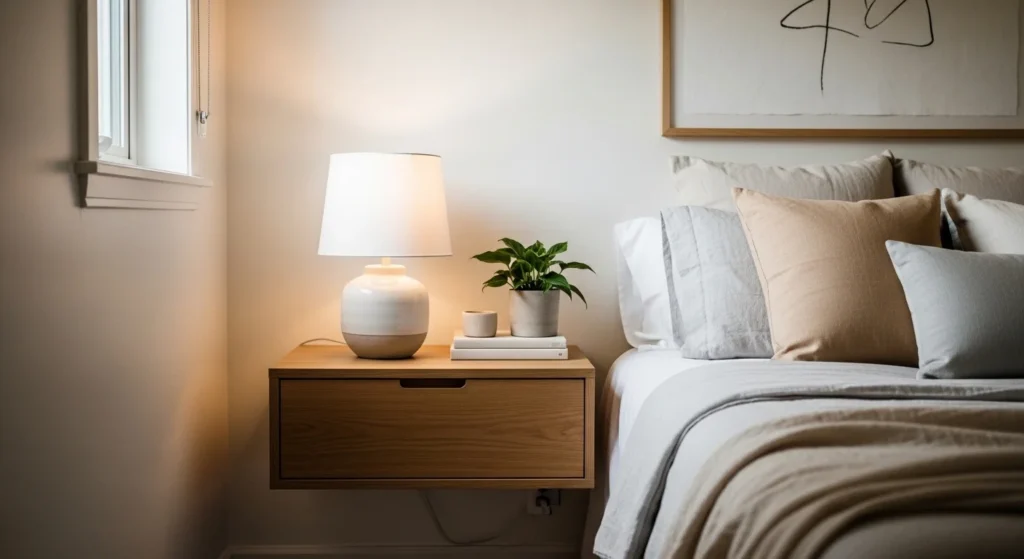
Wall-mounted nightstands are perfect when floor space is limited. A simple floating shelf keeps essentials like a lamp and book within reach while freeing up visual weight underneath. This makes the room feel more open and less crowded. Wood finishes work especially well because they blend naturally with soft bedding and neutral walls. It’s a small switch that has a big impact on flow and balance.
Quick tip: open floor space always makes a room feel larger.
3. Style Warm Ambient Lighting Layers
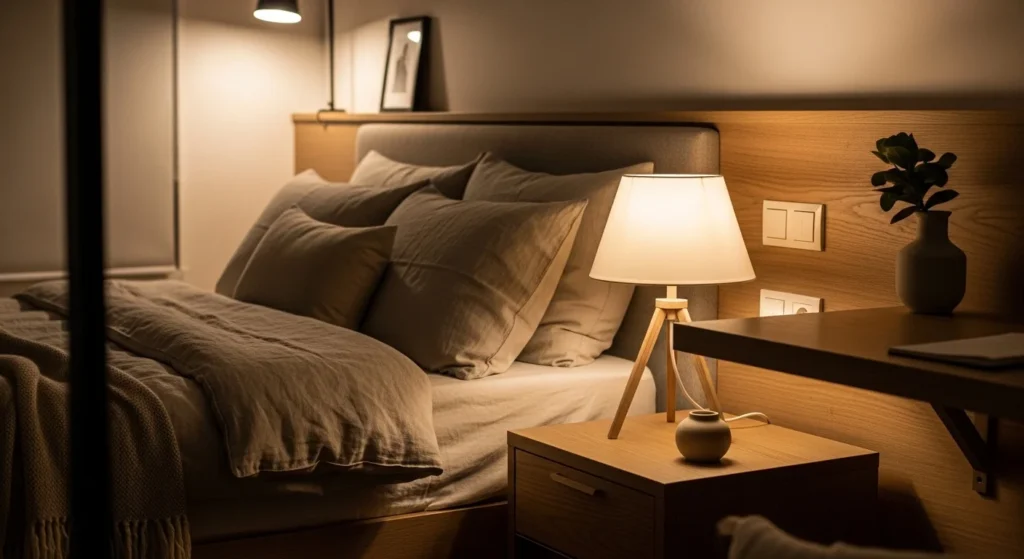
Lighting completely changes how a small bedroom feels. Warm bulbs create softness, while layered lighting adds depth without visual clutter. A bedside lamp paired with subtle background lighting helps avoid harsh shadows. The goal is a calm glow that makes the room feel relaxed at night. Even small lighting changes can shift the entire atmosphere.
Honestly: lighting is more powerful than decor in small spaces.
4. Hang Curtains Higher for Visual Height
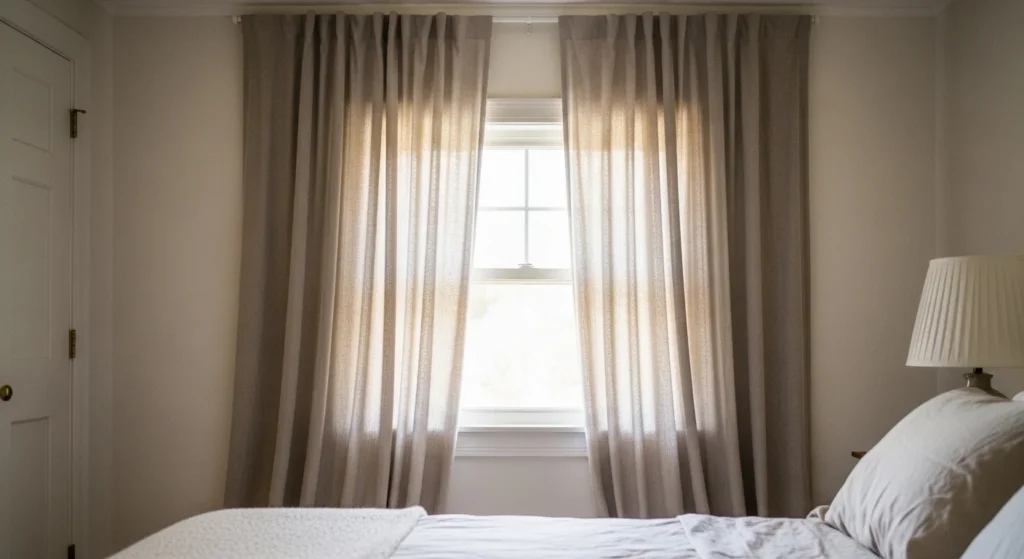
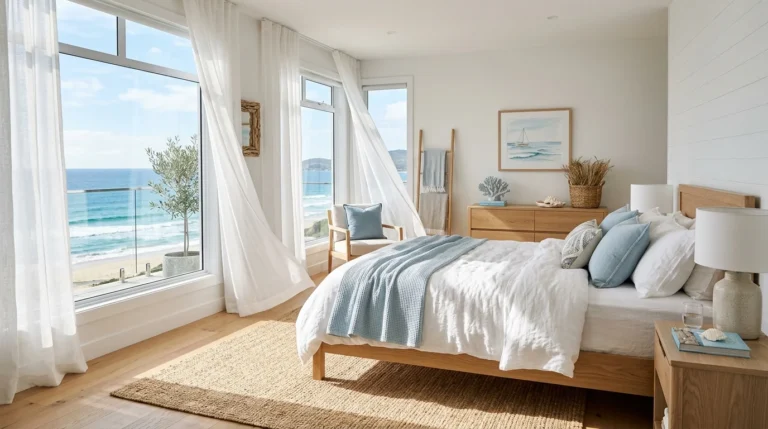
Curtains placed higher than the window frame create an instant illusion of height. Light linen fabrics keep the space feeling airy instead of heavy. Neutral shades blend seamlessly into the room, helping everything feel more open. This is one of those subtle styling changes that doesn’t require renovation but still makes a noticeable difference in proportion.
Worth trying: height tricks change how the whole room is perceived.
5. Incorporate Mirrors for Light Reflection
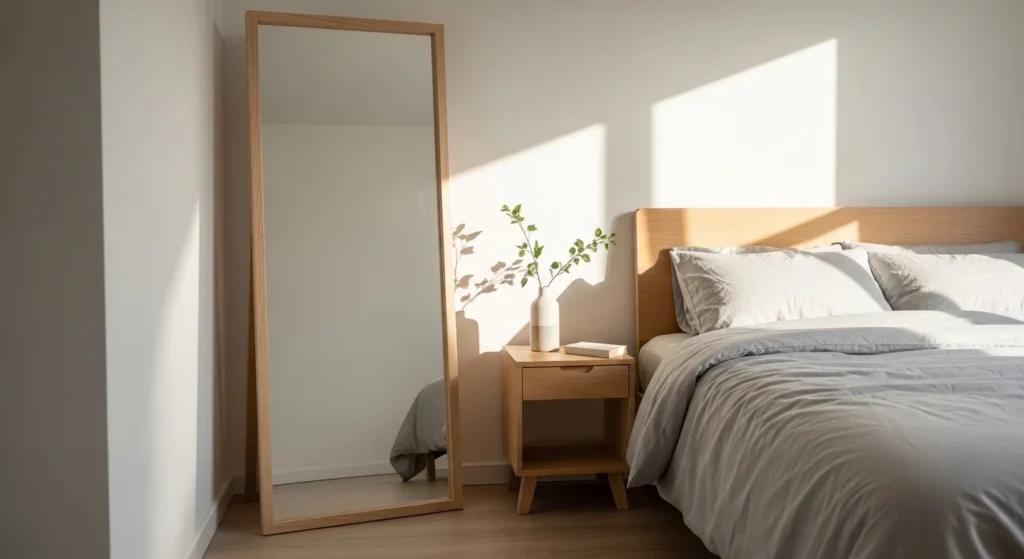
Mirrors help distribute natural light across a small bedroom, making it feel brighter and more spacious. Placing one near a window enhances this effect. A simple framed mirror works best because it adds function without visual heaviness. It also adds depth by reflecting soft textures and tones already in the room.
Little secret: mirrors create space without changing layout.
6. Add Slim Storage Bench End Bed
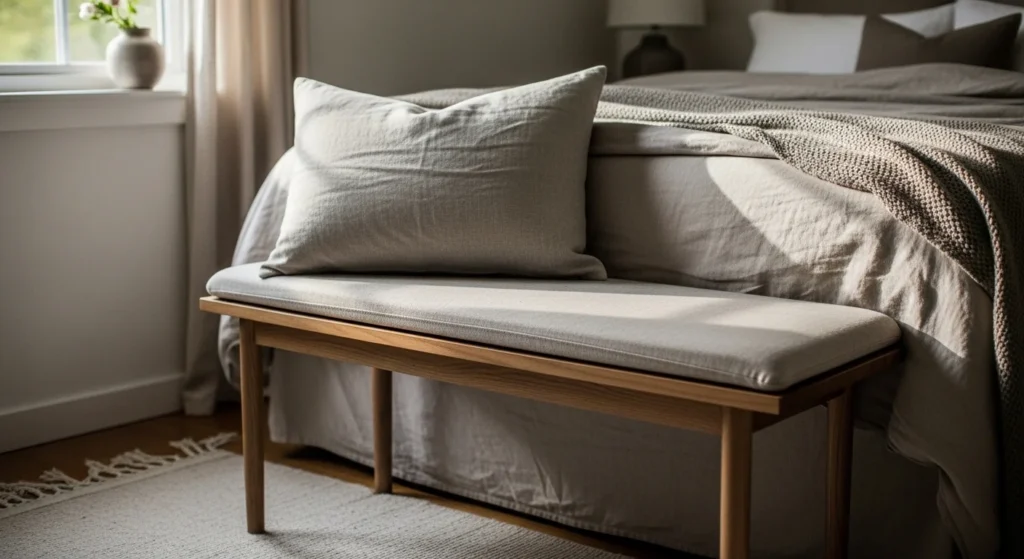
A slim bench at the end of the bed adds function without overcrowding the room. It can hold extra textiles or simply act as a grounding visual piece. Choosing a narrow design ensures movement flow stays clear. Wood or neutral finishes keep it aligned with the rest of the space. It’s practical and visually balanced at the same time.
Good to know: multifunction pieces are key in small rooms.
7. Use Vertical Wall Shelving Storage
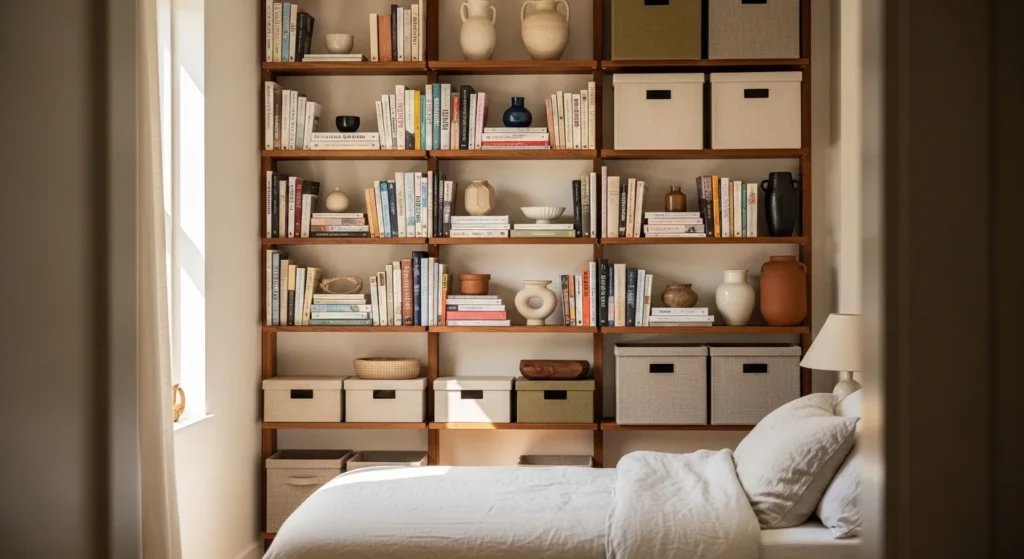
Vertical shelving uses wall space efficiently, freeing up the floor. Wooden shelves with soft decor pieces like ceramics and books keep the look warm instead of rigid. Stacking upward draws the eye higher, making the room feel taller. Keeping spacing intentional avoids visual overload and maintains balance.
My take: vertical space is often underused in small rooms.
8. Place Under-Bed Storage Boxes
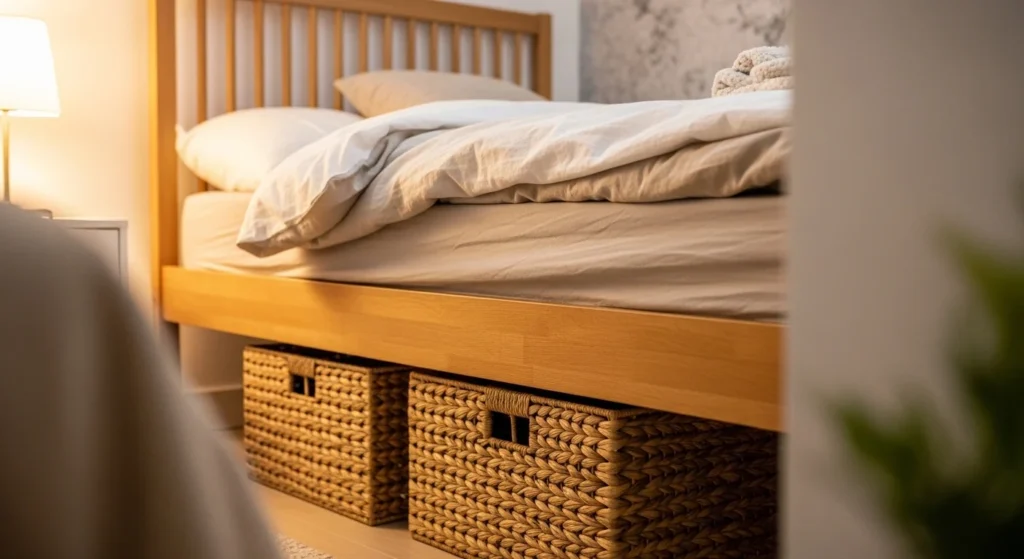
Under-bed storage is one of the most practical ways to reduce clutter. Woven or fabric boxes slide neatly underneath while keeping everyday items hidden. This keeps surfaces clean and visually calm. Choosing neutral tones ensures storage blends into the room instead of standing out.
Simple trick: hidden storage keeps small spaces feeling lighter.
9. Add Light Neutral Wall Paint Tones
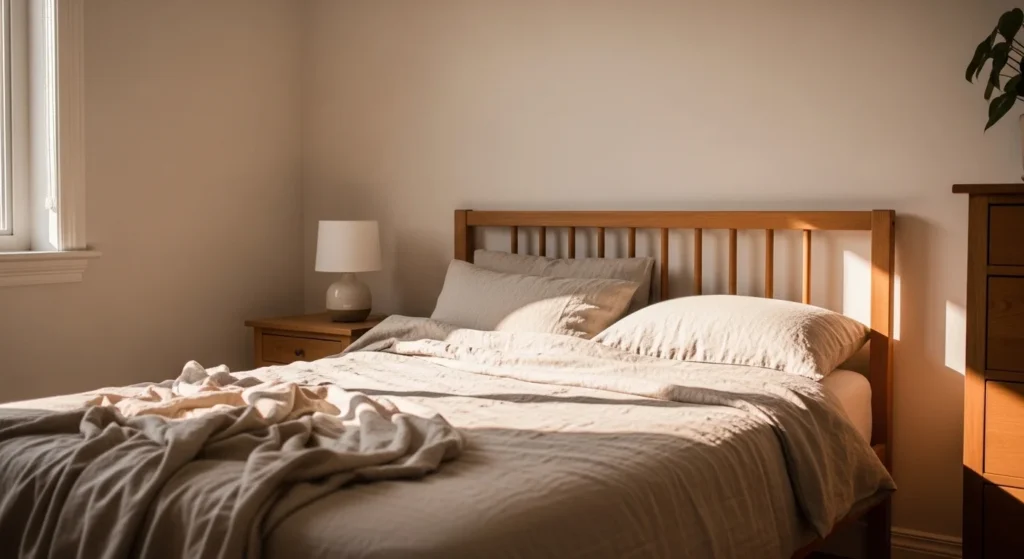
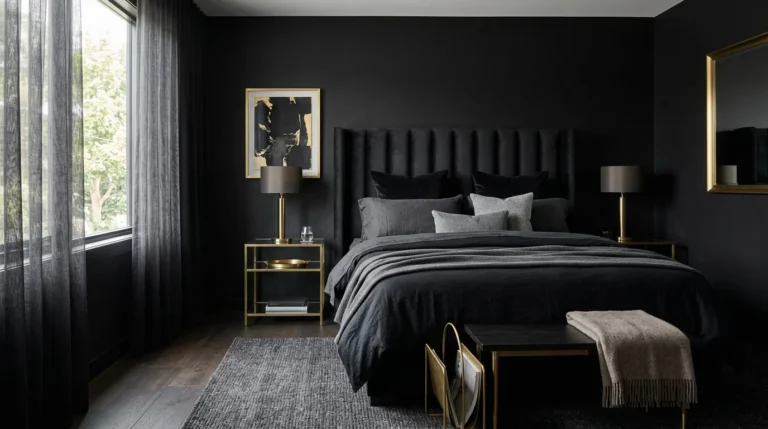
Wall color plays a huge role in how spacious a bedroom feels. Soft neutrals like beige, warm white, or light greys reflect light better and keep the space open. Dark walls can work, but lighter tones generally help small rooms feel more breathable. Pairing them with warm textures prevents the space from feeling cold.
Good to know: wall color sets the base mood instantly.
10. Style Compact Reading Corner
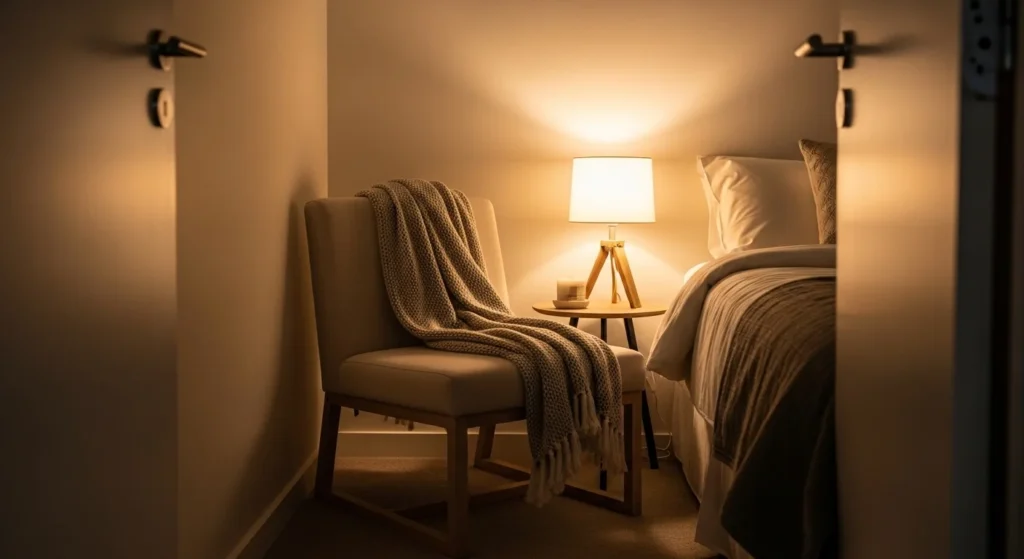
A small reading corner adds function without requiring much space. A compact chair, soft lighting, and a minimal side table are enough. Keeping the setup light ensures it doesn’t overpower the room. This corner becomes a quiet visual break from the main sleeping area.
Real talk: unused corners are wasted styling opportunities.
11. Use Minimal Wall Art Arrangement
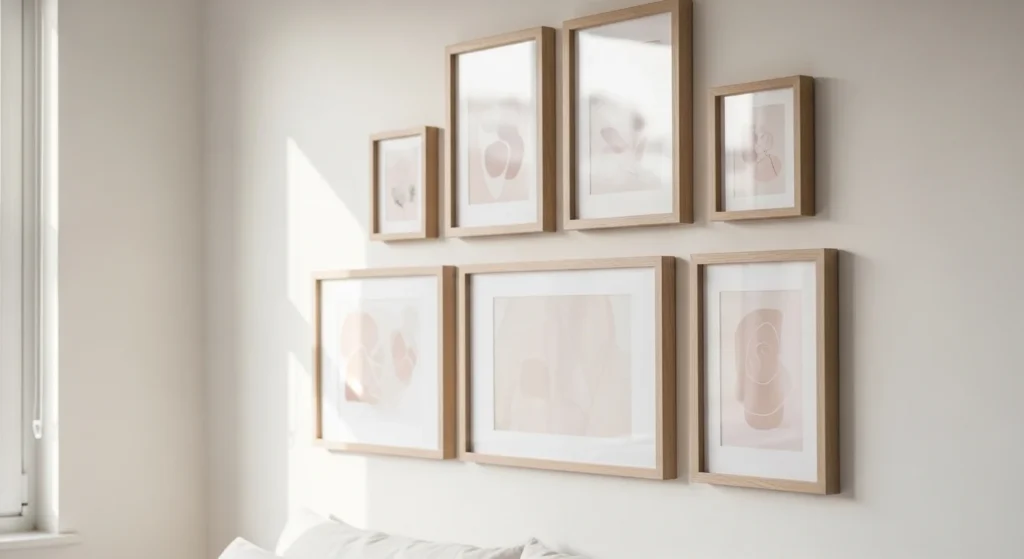
Minimal wall art keeps visual clutter low while still adding personality. A few framed pieces in soft tones are enough to create interest without overwhelming the wall. Keeping spacing even helps maintain calm balance in a small room. It works best when colors stay aligned with the bedding and furniture palette.
Worth trying: less wall clutter always feels more spacious.
12. Add Soft Textured Area Rug
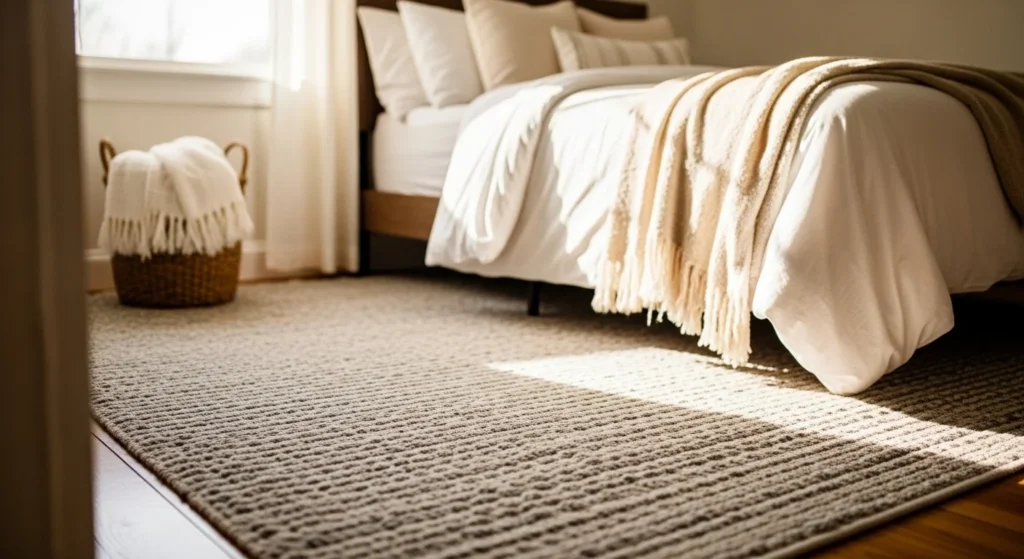
A soft rug grounds the room and adds warmth underfoot. Extending it slightly beyond the bed helps visually define the space. Neutral textures like wool or woven fabric blend easily into small rooms. It also softens harder flooring surfaces, making the room feel more comfortable overall.
Honestly: texture is what makes small rooms feel cozy.
13. Style Simple Floating Wall Desk
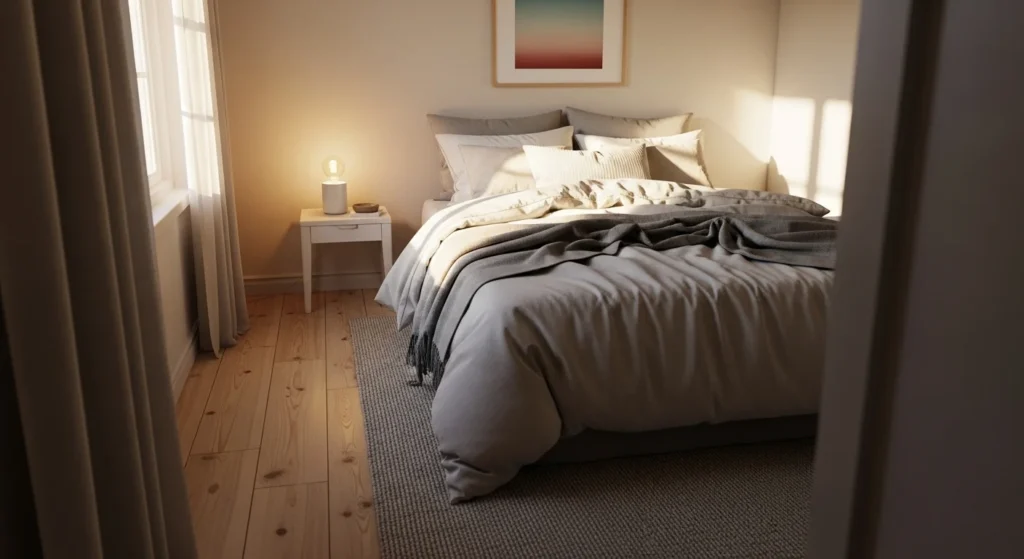
A floating desk provides function without occupying floor space. It works well for compact bedrooms that need dual purpose. Keeping the surface minimal ensures the room doesn’t feel crowded. Wooden finishes help maintain warmth and visual consistency.
Quick tip: floating furniture keeps rooms visually open.
14. Use Soft Linen Curtain Layers
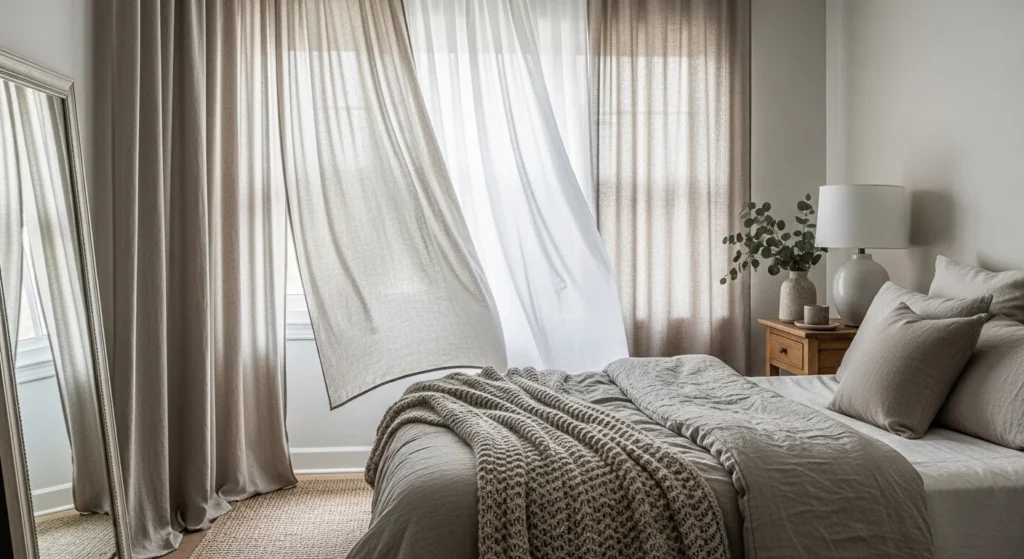
Layered linen curtains soften natural light and make the room feel more relaxed. Lightweight fabrics prevent heaviness while adding subtle texture. Neutral tones help maintain visual consistency across the space. This creates a calm, diffused lighting effect during the day.
Little secret: fabric softness changes room mood instantly.
15. Incorporate Small Accent Plants
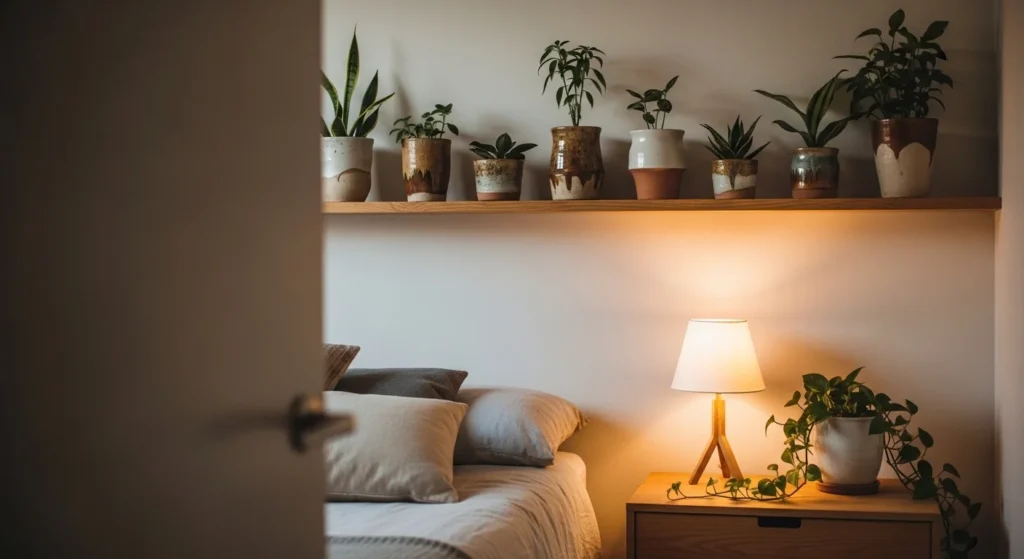
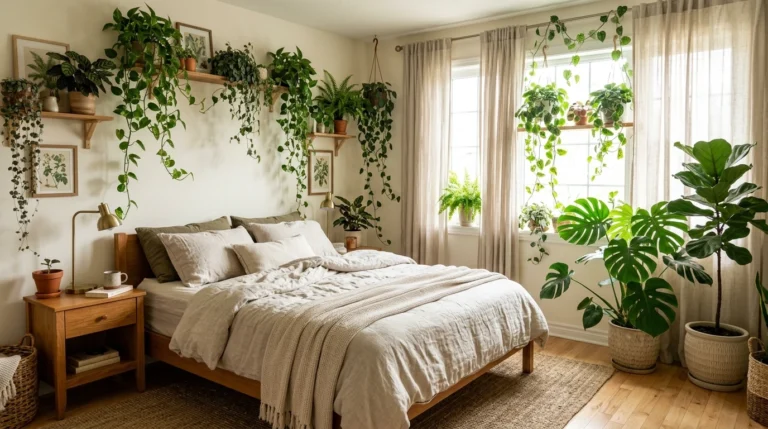
Small plants add life without overwhelming a compact bedroom. A few simple greens in ceramic pots bring freshness and subtle contrast. Placing them on shelves or bedside surfaces keeps them visually integrated. It’s a low-effort way to soften structured furniture.
My take: a touch of green makes everything feel calmer.
16. Add Hidden Lighting Behind Headboard
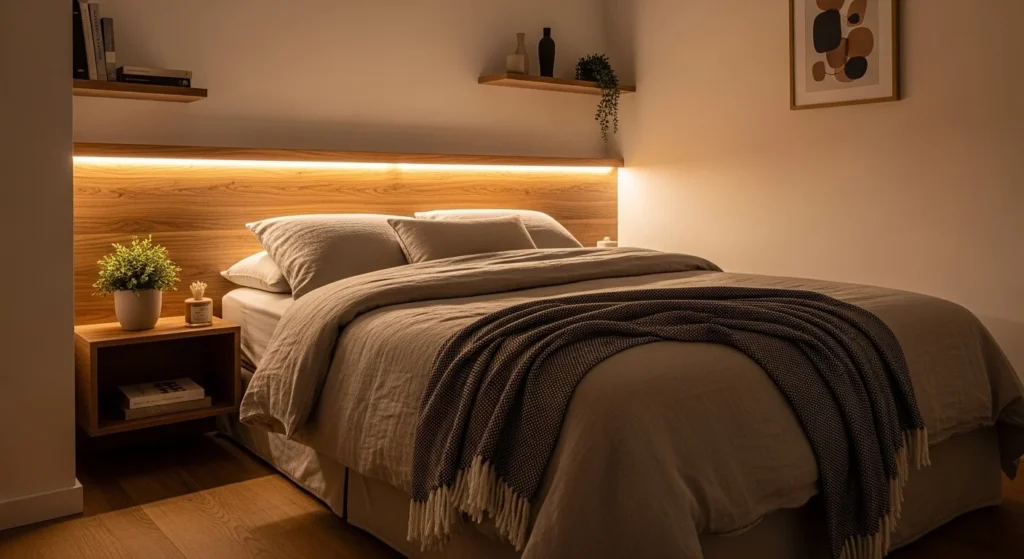
Hidden lighting behind the headboard creates a soft glow that adds depth without taking up space. It replaces the need for bulky lighting fixtures. The effect feels subtle but visually layered, especially at night. Warm tones work best to keep the room cozy.
FYI: indirect lighting always feels more premium.
17. Keep Decor Minimal Surface Styling
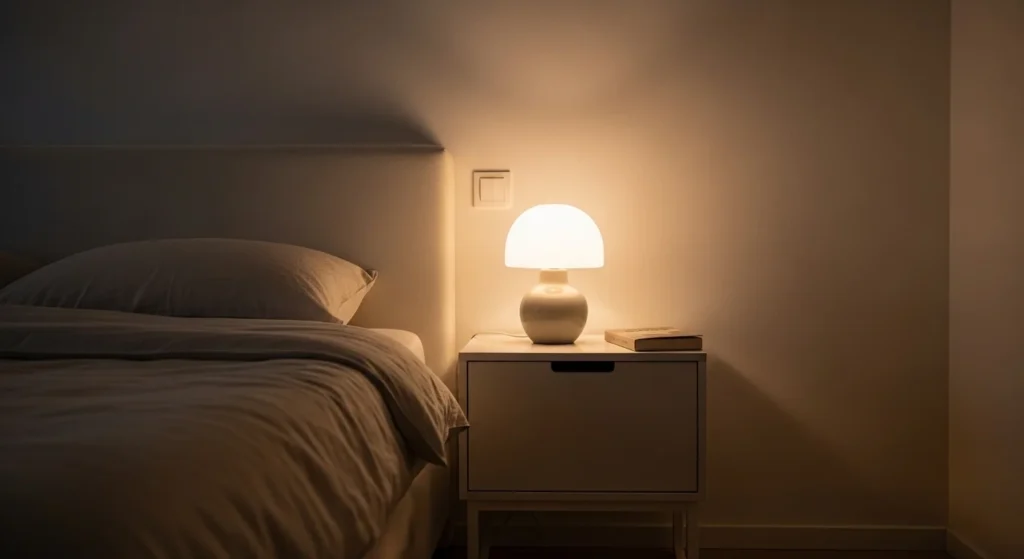
Keeping surfaces minimal helps small bedrooms feel more organized and calm. A lamp, one decor item, and maybe a book are usually enough. Empty space on surfaces is not wasted—it actually improves visual balance. This approach prevents the room from feeling overcrowded.
Good to know: negative space is part of good design.
CONCLUSION
Small bedrooms feel more comfortable when every piece has a purpose and visual lightness is prioritized over quantity. The goal isn’t to fill the space but to let it breathe while still feeling warm and personal. Soft lighting, simple textures, and smart layout choices often make the biggest difference.
These Small Bedroom Decor Ideas show that even compact rooms can feel thoughtfully styled without major changes. Most improvements come from rearranging, simplifying, and choosing materials that naturally complement each other. Over time, these small decisions create a space that feels calm, functional, and easy to live in.