20 Stunning Open Shelving Kitchen Decor Displays That Curate Beauty
There’s a quiet kind of charm in kitchens where everything is a little visible. Not in a messy way, but in that lived-in, “I use this every day” kind of way. Open shelving has this habit of turning ordinary things — a stack of bowls, a glass jar, a cutting board — into something that feels personal without trying too hard.
Neutral kitchens make this even easier. Soft whites, warm woods, and muted tones don’t compete for attention, so whatever you place on those shelves feels calm and natural. It’s the kind of setup where morning light hits your favorite mug, and you instinctively reach for it without thinking.
If you’ve ever wanted your kitchen to feel more like your space and less like a closed cabinet system, open shelving can quietly change everything — here are 20 different designs to inspire you.
1. The Everyday Reach Shelf
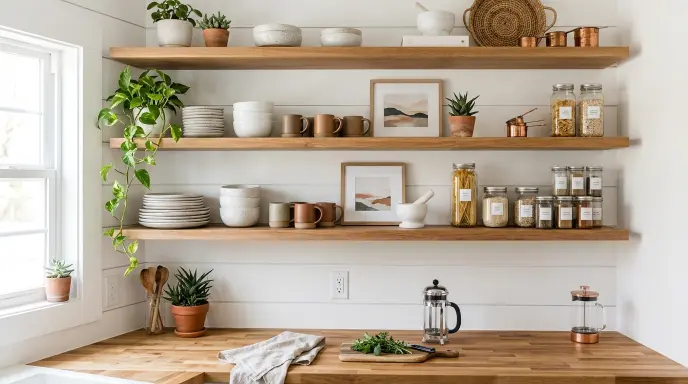
This one feels easy and practical.
Open wooden shelves sit right above the counter, holding your most-used dishes in soft off-white tones.
Plates are stacked loosely, not perfectly aligned, and a favorite mug sits slightly forward like it was just used. A small glass jar with sugar rests near the edge for quick access. You’d probably reach for this shelf multiple times a day without thinking. This works really well if your space feels small because everything stays within arm’s reach.
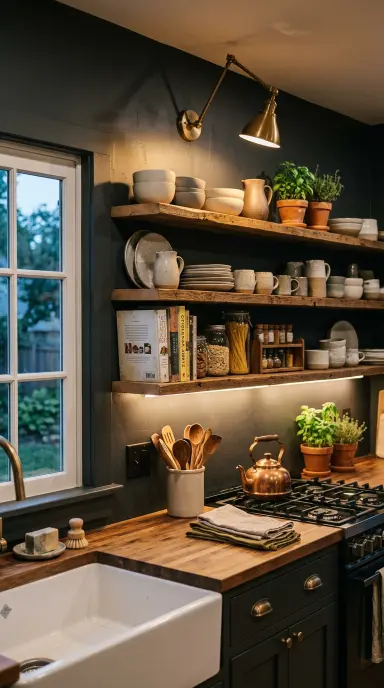
2. The Dark Contrast Display
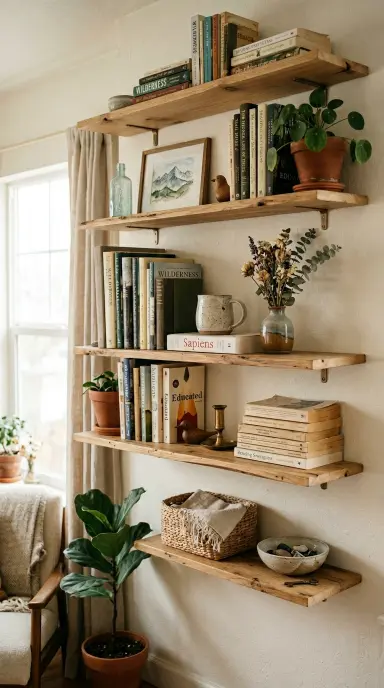
This one leans into mood.
The shelves are mounted against a deep charcoal wall, making lighter ceramics stand out.
Warm lighting underneath the shelf adds a soft glow in the evenings. A couple of bowls, a wooden spoon, and a bottle sit casually, like dinner is about to happen. It makes the space feel grounded, especially at night. You’d probably linger here longer after meals.
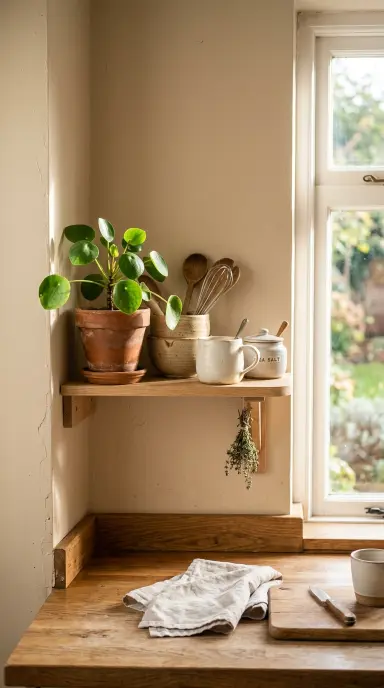
3. The Cozy Corner Shelf
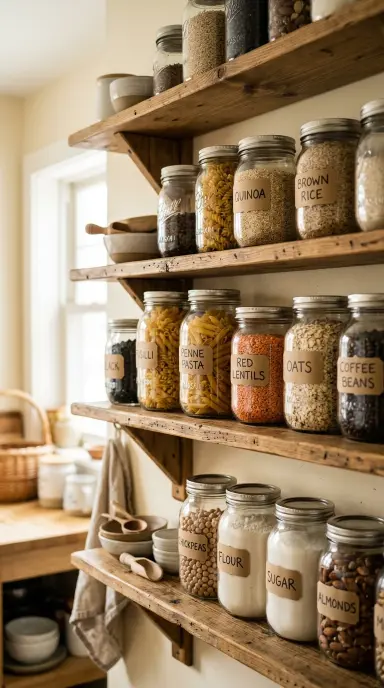
This one makes use of a forgotten spot.
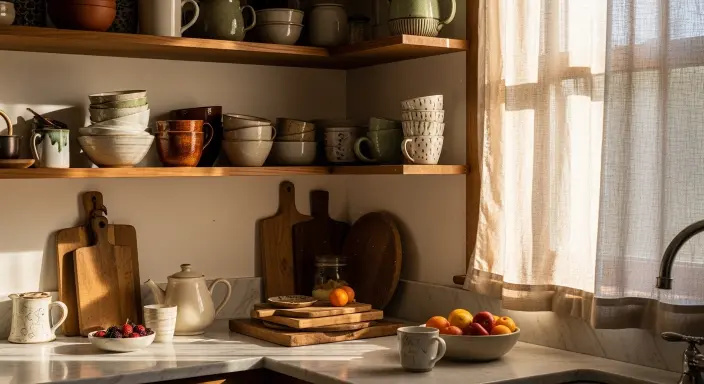
A small L-shaped shelf fits into a corner, holding a mix of bowls and a small plant.
Sunlight hits this area in the morning, making it feel warmer than the rest of the kitchen. A simple ceramic bowl with fruit sits within easy reach. You’d probably end up using this corner every day without planning to. It’s a simple way to make a small kitchen feel more thoughtful.
4. The Minimal Line Shelf
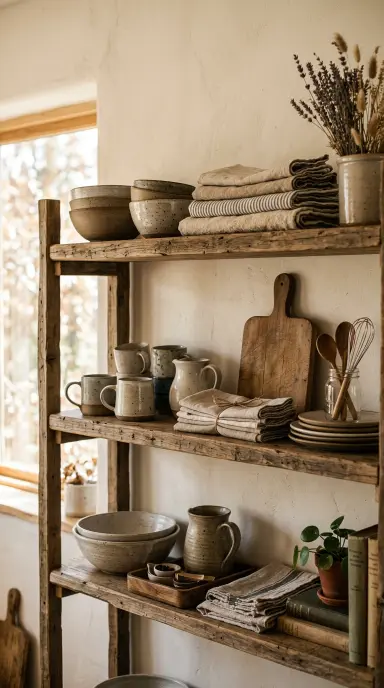
This one keeps things calm.
Thin shelves in a pale wood tone hold only a few items — maybe three or four at most.
A small cup, a plate, and a jar sit spaced apart, leaving plenty of breathing room. It makes mornings feel easier because there’s nothing visually overwhelming. This is the kind of space you’d slow down in.
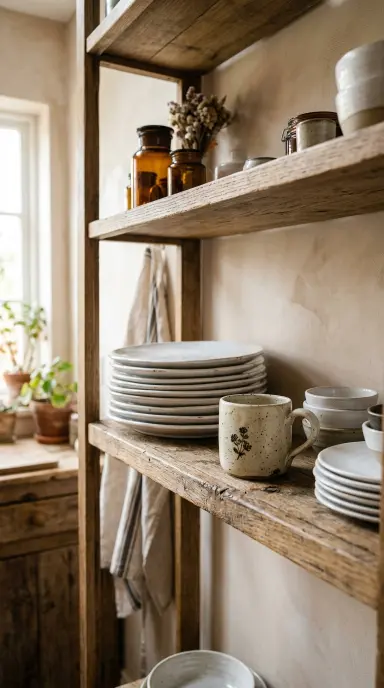
5. The Rustic Layered Shelf
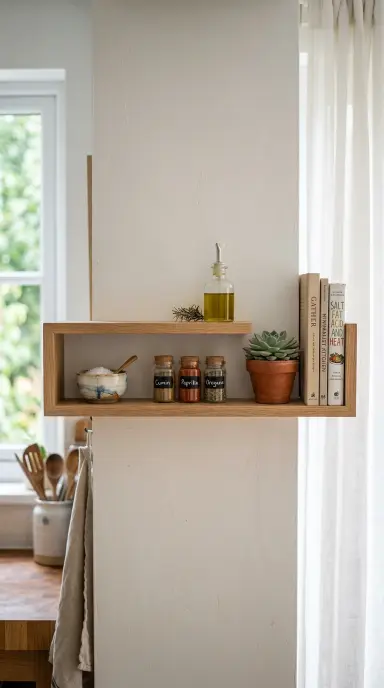
This one feels warm and familiar.
The shelves are slightly rough wood, showing natural grain and uneven edges.
Stacked bowls, a folded linen cloth, and a jar create layers without feeling crowded. Nothing matches exactly, and that’s what makes it feel real. You’d probably add things here over time instead of all at once.
6. The Small Apartment Stack
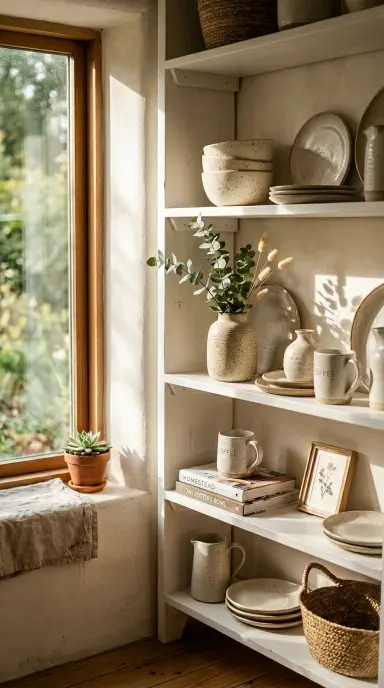
This one is made for tight spaces.
Shelves run vertically instead of wide, making use of height in a small apartment kitchen.
Plates and bowls are stacked higher, but still easy to grab. A mug might sit slightly off to the side after use. This works really well if your space feels small and you don’t have room for cabinets. You’d use this setup constantly.
7. The Glass and Light Shelf
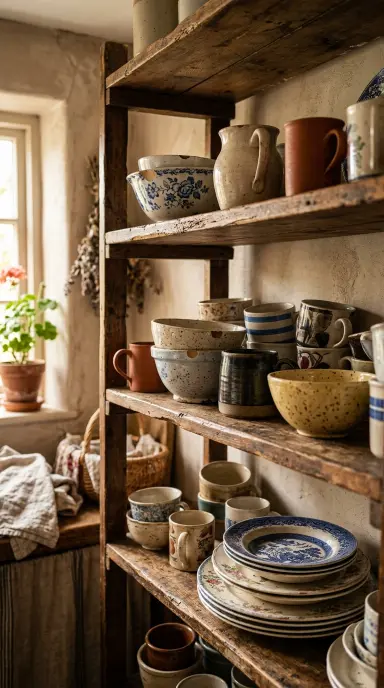
This one plays with light.
Glass jars and clear containers sit along the shelf, catching sunlight during the day.
It creates small reflections that shift as the light moves. A jar of grains or pasta becomes part of the display. You’d probably notice it most in the morning when everything feels brighter.
8. The Family Flow Shelf
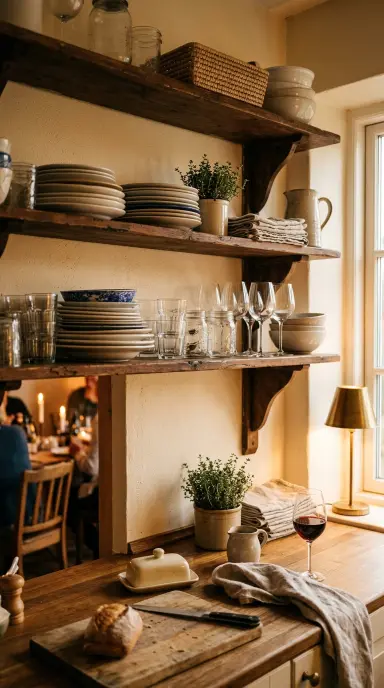
This one is built for everyday chaos.
The shelves hold a mix of dishes, snack jars, and random daily items.
Nothing is perfectly arranged — things move throughout the day. A bowl might sit out longer than expected. It makes busy mornings feel easier because everything is visible. You’d probably rely on this more than closed cabinets.
9. The Japandi Calm Shelf
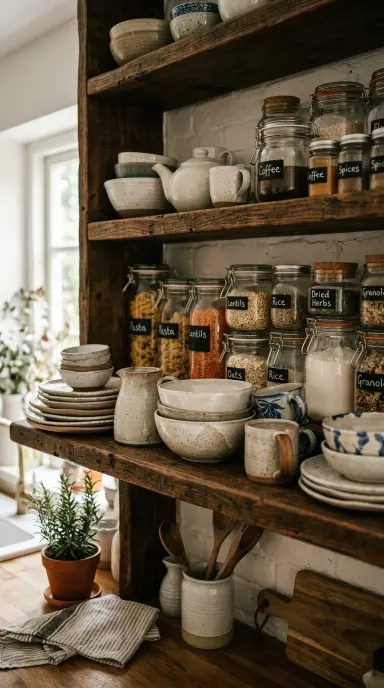
This one feels quiet and balanced.
Pale wood shelves hold a few carefully chosen ceramic pieces in soft tones.
Everything has space around it, which makes the whole kitchen feel calmer. This works really well if your home feels busy and you want one area that doesn’t. You’d naturally keep this shelf simple.
10. The Coffee Station Shelf
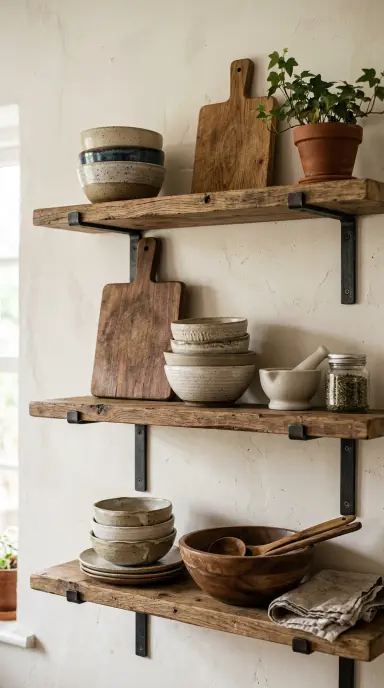
This one makes mornings easier.
A dedicated shelf holds mugs, a coffee jar, and a small spoon resting nearby.
Everything is within reach, so you don’t have to move around much. A mug might stay out after the first cup. You’d probably use this corner every single day. It turns a routine into something a bit slower.
11. The Budget-Friendly Mix Shelf
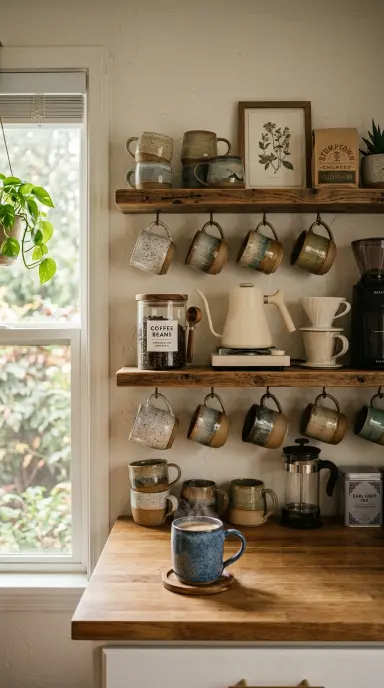
This one feels relaxed and affordable.
Basic shelves with visible brackets hold a mix of items — nothing too coordinated.
A wooden cutting board leans casually against the wall, and a few ceramic bowls are stacked nearby without trying to match. You might add a glass jar or a mug over time, letting it build naturally. This works really well if you’re putting together a budget-friendly kitchen slowly. You’d probably rearrange it often without worrying about getting it “right.”
12. The Hidden Depth Shelf
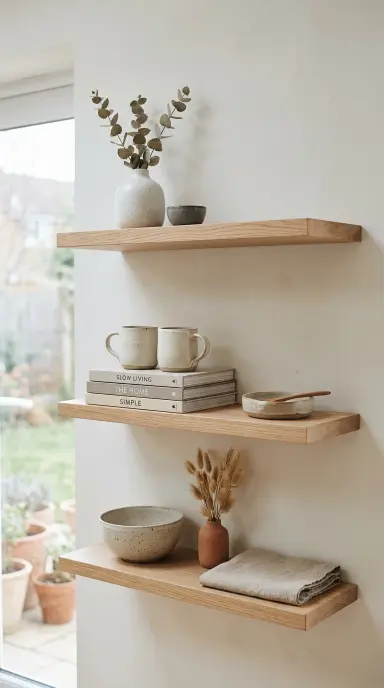
This one adds depth.
The shelves are slightly deeper than usual, letting you layer items instead of lining them up.
Everyday bowls sit in front, while extra jars or plates stay just behind them. It keeps things within reach but still visually calm. A small ceramic bowl or folded cloth might sit near the edge for easy grabbing. You’d notice how helpful this is during busy cooking moments. It quietly makes everything feel more organized.
13. The Entertaining Display Shelf
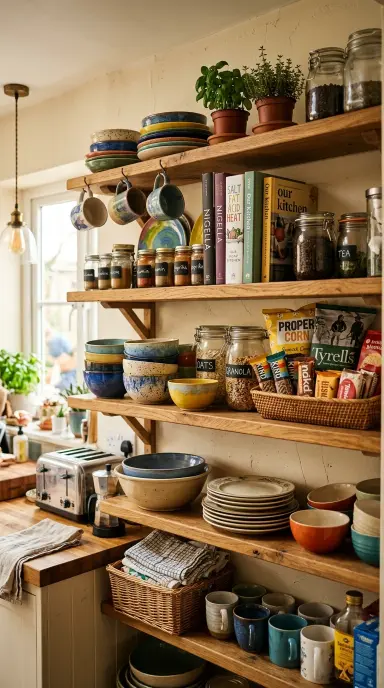
This one is ready for guests.
Shelves hold glasses, serving plates, and a few go-to pieces for hosting.
You might keep a stack of plates on one side and glasses within easy reach on the other. A small tray or bowl sits nearby, ready to be pulled down when needed. It makes hosting feel more relaxed because nothing is hidden away. You’d probably find yourself setting things out here before people arrive.
14. The Vintage Collected Shelf
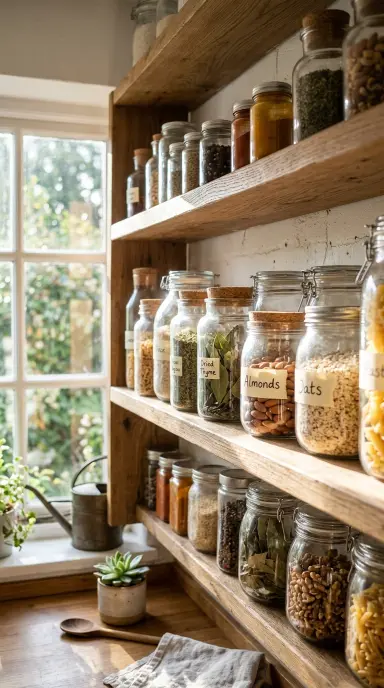
This one feels personal.
Older ceramics mix with newer pieces, creating a layered, slightly uneven look.
A chipped bowl, a faded jar, or a secondhand find might sit next to something newer. Nothing lines up perfectly, and that’s what gives it character. A soft linen cloth or small pitcher adds to the feel. It feels lived-in without trying too hard. You’d probably keep adding pieces over time.
15. The Bright Airy Shelf
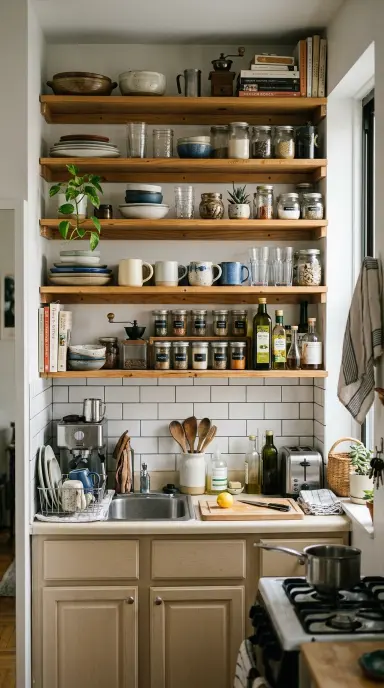
This one keeps things light.
White or soft beige shelves blend into the wall, making everything feel open.
Sunlight moves across the shelves during the day, casting soft shadows behind stacked plates and bowls. A simple glass jar or ceramic piece sits quietly off to one side. This works really well if your space feels small. You’d notice how much easier it feels to move around the kitchen.
16. The Narrow Wall Shelf
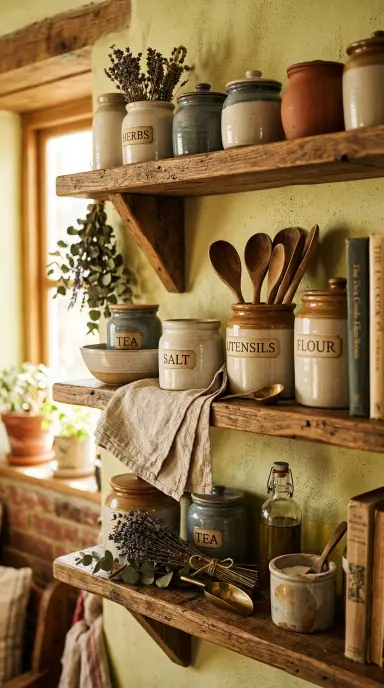
This one fits anywhere.
A thin shelf runs along a narrow wall, holding just a few daily essentials.
Maybe a mug, a small jar, and a bowl — nothing more than what you actually use. It doesn’t take up space, but it still adds function. You’d probably reach for it without even noticing. This works really well in apartment kitchens where space is tight.
17. The Layered Texture Shelf
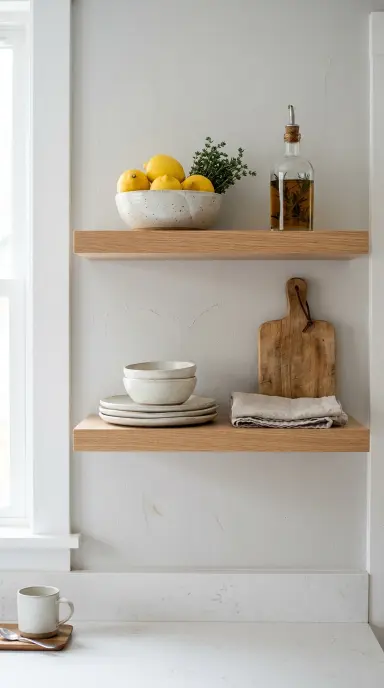
This one adds depth through materials.
Wood shelves hold a mix of ceramics, glass, and soft linen pieces.
A folded cloth drapes slightly over the edge, and a ceramic bowl sits nearby with fruit. The mix of textures keeps it from feeling flat. Nothing is overly arranged, just naturally placed. This is the kind of shelf you’d adjust little by little over time.
18. The Open Pantry Shelf
This one replaces cabinets.
Shelves are filled with jars of grains, pasta, and everyday dry goods.
Everything is visible, so you always know what’s running low. A scoop or small bowl might sit nearby for quick use. It makes cooking feel more straightforward because nothing is hidden. You’d probably rely on this setup every day.
19. The Mixed Height Shelf
This one breaks the pattern.
Shelves are placed at different heights instead of in a straight line.
Taller items like pitchers sit on lower shelves, while smaller bowls and cups fill the higher ones. It creates a more natural flow and avoids that rigid look. You’d probably adjust things based on what you use most. It makes the space feel less structured and more lived-in.
20. The Soft Evening Shelf
This one changes at night.
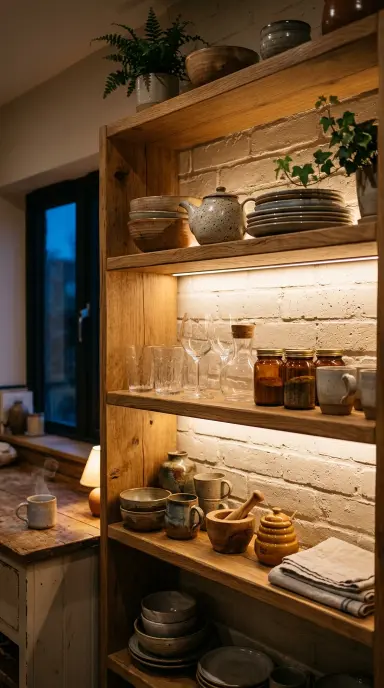
Warm lighting underneath the shelves gives everything a softer tone in the evening.
Glasses and ceramics catch the light differently, adding a quiet glow. A mug or plate might still be out from dinner. It’s the kind of space you’d slow down in after a long day. You’d notice how different it feels compared to the morning light.
Conclusion
Open shelving has a way of making a kitchen feel more like part of your daily rhythm. It’s not about arranging things perfectly — it’s about keeping what you use close, where you can see and reach it without thinking. That’s what makes it feel natural over time.
Neutral tones make this even easier to live with. They don’t compete with your everyday items, so even a simple bowl or a worn cutting board feels like it belongs. You can shift things around, add pieces slowly, or leave a shelf slightly undone — and it still works.
The best part is how flexible it is. Whether your kitchen is small, busy, quiet, or somewhere in between, there’s a way to make open shelving feel like yours.
Which one feels most like your kitchen? I’d love to hear what you’d try in your own space.